
Whole-Home Remodeling Services - Broward County, FL
One CGC License Covering Every Trade on Your Broward Home Remodel
Multi-trade permits submitted to Broward County’s ePermits portal under a single license holder.
What Makes a Broward Whole-Home Remodel Different from Hiring Individual Trades
A whole-home remodel in Broward County is a permit coordination project as much as a construction project. When a kitchen, two bathrooms, and a roof are all being renovated at the same time, each scope touches a different code section. Each trade — plumbing, electrical, structural — operates on its own inspection schedule. Broward County Building Services division requires those inspections to happen in a specific order before work can legally advance.
That’s what separates a general contractor from a collection of individual tradespeople. A CGC — Certified General Contractor, the Florida state license that authorizes a contractor to oversee and permit multi-trade projects involving multiple trades, structural work, and subcontractors — manages the sequence. You can verify a Florida CGC license at any time to confirm active status and license type. One license holder submits all related permits under a single project number. One person attends every inspection. One scope of work defines what every subcontractor is responsible for.
Without that structure, the homeowner becomes the coordinator. They schedule the electrician around the plumber. They chase the building department for inspection status. They absorb the cost of every gap between trades — and in Broward County, those gaps compound quickly.
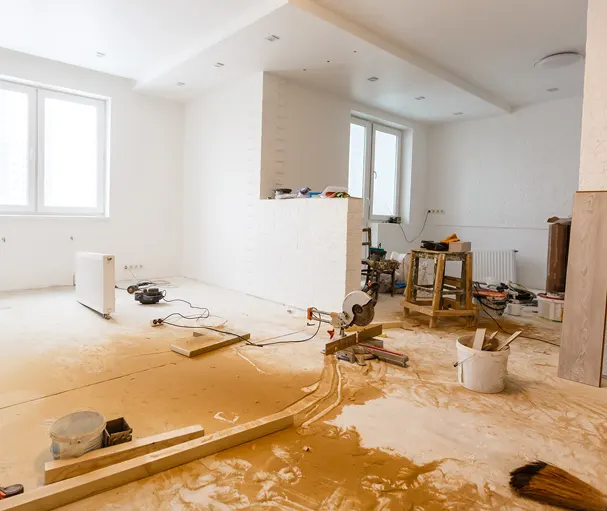

How Broward County's Inspection Sequencing Shapes Every Multi-Trade Project
Inspection sequencing — the required order in which Broward County building inspectors sign off on different construction phases — is not flexible. Framing must be approved before insulation goes in. Rough plumbing must pass before drywall closes the wall. Rough electrical must be inspected before insulation is blown into the attic. The Florida Building Code requirements governing these multi-trade inspections and sequencing are enforced at every phase. If a trade moves ahead of an inspection, the inspector calls a hold. Work stops. Everything behind that hold waits.
The sequencing issue is a scheduling issue first. In Broward County, inspections are requested through the Broward County permit process for home renovations via the ePermits portal — the online system the county uses to submit, track, and approve building permits — and inspectors typically arrive within two to five business days of that request. That’s two to five days of potential downtime if a trade finishes early and the next one isn’t ready.
A CGC managing the project through the ePermits portal tracks inspection status in real time. Subcontractors are scheduled around inspection windows, not ahead of them. To understand how NVN manages permits, inspections, and timelines, that real-time tracking and subcontractor scheduling is central to keeping multi-trade projects on schedule. That’s a logistics decision, not a construction one — and it’s one that individual tradespeople working independently cannot make for each other.
One other Broward-specific factor: the county is made up of 31 municipalities, and each one has its own municipal planning department running a parallel review alongside county Building Services. A renovation in Coral Springs moves through a different plan review path than the same project in Dania Beach — even under the same county permit system. A licensed general contractor working in Broward County factors this into the project timeline before work begins.


A Broward Homeowner Renovating Three Rooms at Once - Here Is What Coordination Actually Looks Like
The scenario is specific: a kitchen gut renovation, a full primary bathroom remodel, a hall bathroom update, and a roof replacement — all on one Broward County property.
The homeowner initially planned to hire each trade separately. A kitchen contractor. A bathroom tile and plumbing crew. A roofer. The scheduling would sort itself out as the project went.
The problem became visible in week one. The roofer wanted to start the same week as kitchen demo. The kitchen demo crew needed electrical rough-in completed before they could frame the island. Electrical rough-in required a permit that hadn’t been submitted yet. The bathroom plumber had a three-day window available and couldn’t hold the slot without a confirmed start date. Nobody had a start date because no one had coordinated the permit submissions to Broward County Building Services.
That’s the gap. Not bad contractors. Not bad materials. No coordination structure.
On a project like this, the permit submission involves multiple trade permits: a structural permit for the roof, a plumbing permit for the bathroom rough-in, an electrical permit for the kitchen island and bathroom circuits. Under a CGC holding a multi-trade permit — a single permit application that covers multiple types of work under one project number — all of those submissions go to Broward County Building Services through one portal account, under one license, as one project. Inspections are scheduled in the correct sequence. Subcontractors are given confirmed start windows, not tentative ones.
Broward County’s ePermits portal allows the licensed CGC of record to request all associated inspections from a single dashboard. The homeowner doesn’t create an account, doesn’t track application status, and doesn’t field calls from the building department. That’s the job of the contractor of record.
Project Outcome
On that four-scope project: once permits cleared plan review, demo started in week two. Electrical rough-in passed on day five. Plumbing rough-in passed two days later. Drywall went up on schedule. Roof inspection passed before interior work finished.
The Certificate of Completion — the official document Broward County issues confirming all permitted work is complete and code-compliant — was issued 11 weeks after permit submission. No inspection holds. No idle days between trades.
If you’re evaluating scope and budget before committing to a project of this size, see what a whole-home remodel costs in Broward County for a detailed breakdown by project type and trade scope.
One CGC License. One ePermits Submission. One Point of Contact for the Whole Project.
NVN Construction holds Florida CGC license #CGC1539896 – the Certified General Contractor credential Florida requires to legally oversee multi-trade projects and pull master permits on residential renovations in Broward County.
When homeowners ask what happens if something changes mid-project, the answer is a legal structure, not a process promise. The scope of work – the written document that defines exactly what will be built, removed, or changed – is established before demo begins. If a condition surfaces during demolition that wasn’t visible from the outside, we assess it against the existing permit scope and determine whether an amendment is needed before work proceeds. That decision is made by the license holder. Not a project manager relaying notes. The person whose license is on the permit.
A CGC is personally accountable to Broward County Building Services for every phase of a permitted project. The homeowner doesn’t carry that accountability. We do.
You can verify CGC1539896 at myfloridalicense.com in under 60 seconds. Search the license number directly. Active status, license type, and any DBPR – Florida Department of Business and Professional Regulation – disciplinary record are all public. Look before you call.
I Scope the Full Permit Before a Subcontractor Schedules a Single Day
No subcontractor gets a confirmed start date until the permit scope of work is finalized and submitted to Broward County.
Here’s what that standard looks like in practice:
01
Pre-construction site walk first.
I walk the property before writing a single line of scope. Existing conditions, prior permit history through Broward County’s public records, structural observations — all of it is documented before a scope of work document is drafted.
02
Scope of work defines every trade.
The written scope identifies which subcontractors are needed, what each is responsible for, and the sequence their work must follow relative to required inspections.
03
Permit submitted under CGC1539896.
The multi-trade permit goes to Broward County Building Services through the ePermits portal under the CGC license. The license holder submits directly.
04
Subcontractors are licensed and verified.
Every trade hired under the project is a licensed subcontractor. Their work falls under the CGC’s supervision and accountability to Broward County.
05
Inspection scheduling is built into the timeline.
Each inspection window is factored into the construction schedule before demo starts. The two-to-five business day response window from Broward County Building Services is accounted for between phases — not discovered after a trade finishes early.
06
Change orders in writing.
Any modification to the original scope — whether triggered by a demo discovery or a homeowner decision — is documented as a written change order before work proceeds.
The Permit Phase, Demo Phase, and Inspection Phase — Explained for Broward Projects
Every multi-trade Broward project moves through three distinct phases, and the transition between each one is governed by Broward County Building Services.

PHASE 01
The Permit Phase
The permit phase begins at the pre-construction site walk and ends when Broward County issues the permit. During this phase, the scope of work is written, construction drawings are prepared where required, and the permit application is submitted through the ePermits portal.
Plan review time varies by project complexity and municipality. Simple residential permits may clear in two weeks. Multi-trade projects with structural components typically take four to six weeks. Municipalities within Broward — Coral Springs, Plantation, Hollywood, and others — each run a parallel municipal review that can extend the timeline beyond the county’s standard window.
The homeowner’s role during this phase: sign the Notice of Commencement. That’s the legal document recorded with Broward County before construction begins, identifying the property owner and contractor of record and protecting both parties in the event of a lien dispute. We prepare it. The homeowner signs it.
PHASE 02
The Demo and Rough-In Phase
Demo begins after the permit is in hand. Work without a permit in Broward County carries a stop-work order risk — and retroactive permitting on finished work requires opening walls for inspection. That cost exceeds the original permit fee by a significant margin.
During demo and rough-in, subcontractors work in the sequence defined by the scope of work: structural framing first, then rough plumbing, then rough electrical. Each rough-in phase ends with a required inspection. Broward County’s rough-in inspection must be passed before any wall covering is installed.
This is the phase where coordination matters most. The plumber cannot close their rough-in until the electrician completes theirs. Neither can close until the inspector has been requested and arrived. The ePermits portal is where that request gets made, and the CGC of record makes it.
PHASE 03
The Inspection Phase
The final inspection is the last required Broward County inspection confirming all permitted work is complete and code-compliant. Passing it triggers the Certificate of Completion. That document becomes part of the property’s permanent permit record — searchable by property address through Broward County’s public portal.
For a homeowner eventually selling the property, the Certificate of Completion is evidence that the work was permitted and inspected. Title companies can verify it. Buyers’ lenders can verify it. An appraiser can note it.
The final walkthrough with the homeowner occurs after the Certificate of Completion is issued. We review every scope item, confirm the built work matches what was permitted, and hand over all project documentation: permit records, subcontractor records, inspection results, and the Certificate of Completion.
Broward County Homes We Manage from Coral Springs to Hallandale Beach
NVN Construction serves homeowners across Broward County, FL, from the county’s northwestern municipalities to its southeastern communities.
We work in Coral Springs, Tamarac, Margate, and Coconut Creek in the northwest, where larger single-family homes frequently involve multi-room renovation scopes. We serve Plantation, Sunrise, and Lauderhill in the central county, where older concrete block construction often requires structural assessment before interior work begins. In the south, we work in Miramar, Pembroke Pines, Hollywood, and Hallandale Beach – communities with a higher concentration of HOA-governed properties where setback and design envelope reviews are part of every outdoor and structural scope.
Fort Lauderdale and Pompano Beach projects are a regular part of our work, as are projects in Dania Beach, Deerfield Beach, and Davie. Every project, regardless of municipality, is submitted through Broward County’s ePermits system under CGC1539896.
Start with a Whole-Home Site Walk - Free for Broward County Homeowners
One licensed CGC handling the permit, the coordination, and the inspection sequence makes a multi-trade Broward remodel manageable from the first conversation.
Call NVN Construction to schedule a free on-site assessment for your remodel. We walk the property, review existing permit history, and document current conditions before any scope is written or cost is discussed. You’ll leave that visit with a clear picture of what your project requires — in writing.
Free on-site assessment. Written summary. No cost, no obligation.
How much does a whole-home remodel cost in Broward County?
A multi-room renovation in Broward County typically ranges from $60,000 to $250,000 depending on scope, materials, and permit complexity. Labor rates in South Florida run above the national median, and hurricane-rated materials carry a price premium over standard-grade products used elsewhere. Permit fees are calculated on submitted project valuation – a cost line that surprises homeowners who budgeted from national averages. NVN Construction provides a written cost range after a physical site assessment, not before.
How long does a whole-home remodel take from permit to Certificate of Completion?
A four-scope remodel – kitchen, two bathrooms, and a roof – typically runs 10 to 14 weeks after permit approval. Plan review in Broward County adds two to six weeks before any construction begins. Rough-in inspection windows between trades add scheduled wait days that must be factored into the timeline.
Can I pull my own permit instead of hiring a general contractor for my renovation?
Yes – Florida’s owner-builder exemption allows a homeowner to pull their own permit without a contractor license under specific conditions. However, the exemption limits your ability to sell the home within one year of completion and does not apply to all project types. It also places full code compliance responsibility on the homeowner, including scheduling every required Broward County inspection. For multi-trade projects, the exemption does not replace the coordination that a CGC – a Certified General Contractor licensed to oversee projects involving multiple trades – provides.
What happens if demo uncovers something unexpected - mold, rot, or a structural problem?
Work stops, and the condition is assessed against the existing permit scope before anything proceeds. If the new condition requires a scope change, a written change order is prepared and, where needed, a permit amendment is submitted to Broward County Building Services before work resumes. Proceeding without documenting an unexpected structural find puts the homeowner outside the permitted scope – a violation that can trigger a stop-work order. Every demo discovery is handled as a permit decision, not a field judgment call.
Does NVN Construction carry insurance on permitted projects?
Yes – general liability insurance is a requirement for maintaining an active Florida CGC license. License #CGC1539896 is issued by the Florida DBPR, which requires proof of insurance at renewal. For a homeowner, this means any damage caused during a permitted project is covered under the contractor’s policy, not the homeowner’s. You can verify active license status – and confirm the insurance requirement is being met – at myfloridalicense.com using the license number directly.
How do I know if my renovation needs a CGC or just a specialty contractor?
A single-trade job – replacing one bathroom’s plumbing fixtures, for example – typically does not require a CGC. Once a project spans multiple trades, involves structural changes, or requires more than one permit type, a CGC becomes necessary. In Broward County, kitchen and bathroom renovations that move walls, add circuits, or alter plumbing drain lines almost always trigger multi-trade permit requirements. If you’re unsure, the free on-site assessment identifies exactly which license class the scope requires before any commitment is made.
Does my Broward municipality affect how long the permit process takes?
Yes – Broward County’s 31 municipalities each run a parallel plan review alongside county Building Services. A permit submitted for a project in Coral Springs moves through a different municipal review path than the same project in Hollywood. Some municipalities have faster turnaround; others add one to three weeks to the county’s standard timeline. NVN Construction factors the specific municipal review process into the project schedule before the permit is submitted.
NVN Construction has been in business for one year - is that a concern for a large remodel?
NVN Construction holds Florida CGC license #CGC1539896 – a credential issued by the state DBPR that requires demonstrated knowledge of Florida Building Code, financial responsibility, and passing a state licensing exam. The license is the legal standard Florida uses to qualify a contractor, not years in business. Every permitted project is publicly recorded with Broward County Building Services, inspected by county inspectors, and closed with a Certificate of Completion – an independent verification of code-compliant work that exists regardless of how long a company has been operating.
What should I have ready before the site walk?
Nothing is required – but two items speed up the assessment. First, any prior home inspection reports you have, particularly ones that flagged structural or permit issues. Second, your HOA design guidelines if your property is governed by an association, since Broward County HOA rules restrict certain materials and structure types that building code permits. The site walk itself typically takes 45 to 90 minutes. You’ll receive a written summary of what was found, not a verbal estimate on a follow-up call.
Address
8400 Miramar Rd Ste 200A San Diego,
CA 92126
ron@tamparooffix.com
Phone
(858) 330-3173
Lorem ipsum dolor si
Lorem ipsum dolor sit amet consectetur adipiscing elit sed do eiusmod te